School districts across Pennsylvania are starting to see the benefits of the commonwealth’s shrinking multi-billion dollar education funding gap between poorer and wealthier school districts.
Whether it is hiring kindergarten teachers or supporting construction projects for new school buildings, hundreds of school districts across Pennsylvania are beginning to see the benefits of the increased adequacy capital designed to close the funding gaps between the commonwealth’s poorer and wealthier school districts.
“ Shippensburg [School District], where I am, we are receiving adequacy funding, and I just talked to my superintendent about it actually,” Susan Spicka, Executive Director of Education Voters of Pennsylvania, told The Keystone.
“Shippensburg is paying for 12 kindergarten teachers’ salary and benefits with this, and given the budget outlook this is allowing our district to not have to look at having full day kindergarten be on the chopping block.”
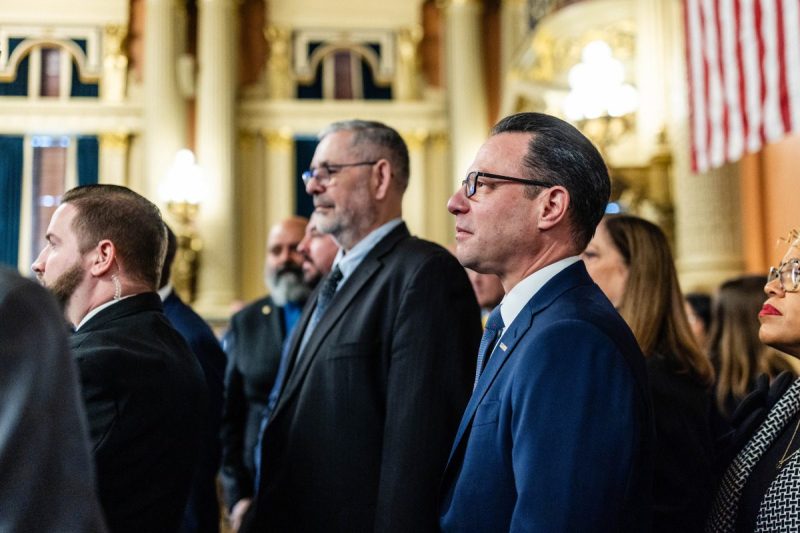
Following his latest budget address, Gov. Josh Shapiro proposed a third installment of a $565 million increase in adequacy funding to chip away at the $3.8 billion chasm between poorer and wealthier districts.
Lawmakers in the Pennsylvania General Assembly launched the Basic Education Funding Commission and adopted its proposals to close the $5.4 billion education funding gap after the Commonwealth Court ruled in 2023 that Pennsylvania failed to meet its constitutional obligations to adequately fund public education for all students across the commonwealth.
“ We are thrilled to see that there is a a bipartisan commitment in Harrisburg for closing the adequacy gap,” Spicka said. “They did it for two years and this is the third installment. It is a non-negotiable priority for the budget to be able to close this gap.”
Republicans in the Pennsylvania Senate briefly took adequacy funding off the negotiating table during last year’s prolonged budget fight, but eventually returning it before Shapiro signed the bill into law.
For State Rep. Peter Schweyer (D-Lehigh), who chairs the Pennsylvania House Education Committee, that funding was never in jeopardy.
“Their budget gamesmanship was silly,” Schweyer said in an interview. “ I never believed any of that was actually serious. They knew we were not going to close a budget without those dollars. They ended up voting for a budget that included all of that money coupled with significant reductions in spending on the failing cyber schools.”
Schweyer, who lives in Allentown and has sent both of his children through the Allentown City School District, explains how his district has benefitted from the shrinking disparity.
Last year, Allentown City School District received more than $20 million in funding to help pay teachers and break ground on new school buildings.
“We’ve had a significant increase in educators, most notably in social education and kindergarten teachers. We have brought back related arts, which had been decimated across the board,” Schweyer said.
“ The school district broke ground on a brand new K-8 school that will ultimately replace a middle school that was built in 1874. It’s the oldest continuously in-use school in Pennsylvania, [and] the school district is about ready to acquire land to replace another middle school that was built in 1907.”
Schweyer added that since the funding has gone into effect, he’s noticed an uptick in student and parent involvement.
“ We’re also seeing, and this is anecdotal, I acknowledge, but we’re also seeing a lot more parental involvement than I’ve ever seen before, and that really truly matters in all of this,” he said.