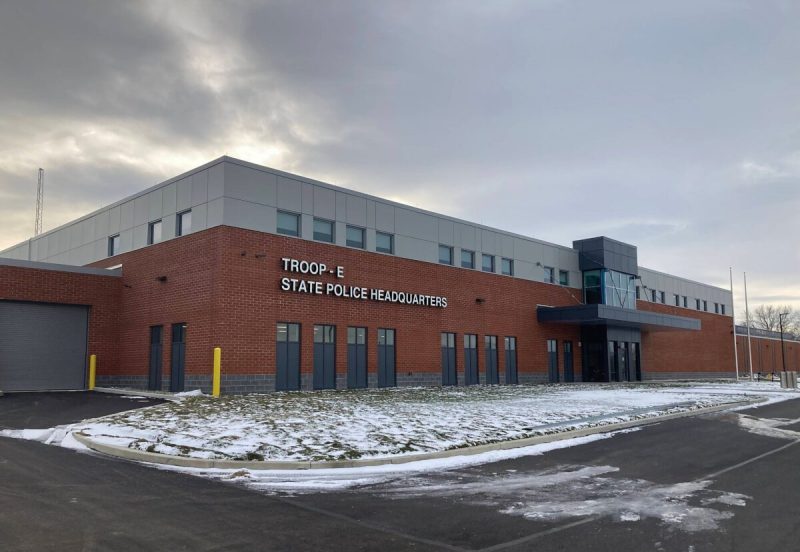
Pennsylvania State Police cover two-thirds of the state’s municipalities that do not have their own police department, putting a statewide agency in charge of local patrols for more than 1,300 localities across the state.
The service costs $0 for municipalities, which is a far cry from the $100,000 or more it can cost a borough or township to join a regional department. A municipality with its own department typically pays millions for coverage.
A bill in the state House would impose a fee on municipalities that use state police for local coverage. Dauphin County Democratic state Rep. Justin Fleming said his proposal is aimed at raising money to fund the state police and creating equity in police services.
Taxpayers with local or regional police services are paying between $300 and $400 per person for that, Fleming said, noting that those people are also paying standard state taxes and the Pennsylvania Motor License Fund.
That fund’s money comes mostly from vehicle registration fees and gas taxes. While it was designed to improve roads and bridges, a portion of it goes to state police. A 2025 proposal sought to end that practice but did not get a House vote after clearing its committee unanimously.
Fees under Fleming’s bill would be determined on a per capita basis, meaning that a municipality’s population would dictate its fee. And the fees would be less than $300 per person for a borough, township or city, Fleming said.
“It wasn’t supposed to be a dollar-for-dollar match,” he said, noting a funding boost for state police could help them hire more officers and respond faster. “Response times, there’s a cost to that. PSP may not get there for a half-hour. I would want a quicker response if I were in danger.”
Fleming put out a memo for his proposal in fall 2025 and introduced the full bill earlier this month.
Bill support is suspect
There are no Republicans co-sponsoring Fleming’s bill. He said organizations representing local governments in Harrisburg tend to oppose the proposal that gained steam during Gov. Tom Wolf’s time in office but has never gotten off the ground.
“Everybody pays for state police, everybody should get state police,” said Dave Sankos, executive director of the Pennsylvania State Association of Township Supervisors. “I don’t support the idea of penalizing folks who choose to not have a local police department.”
And if local governments get charged for using state police as its local force, Sankos proposed charging every community for using state police. Philadelphia, which has its own police department, would be assessed the largest bill, he said.
State police patrol about 82% of Pa.’s land area
State police patrol about 82% of the commonwealth’s land area, a region that only encompasses about a quarter of its population. Fleming said the state police agency estimates it provides more than $641 million in free services each year to communities that lack their own departments.
For doing this work, state police get reimbursed from a state fund filled with revenues from gas taxes and driver license fees. In the 2022-2023 fiscal year, this repayment totaled $500 million.
Officials with the state police pushed back on the notion of drastically long response times since officers have patrol zones and seldom, if ever, respond from their troop’s station like firefighters.
“We’re responding in a car,” said Myles Snyder, state police communications director. “We’ll be within a (coverage) location and may be in town at the time a call is received.”
People critical of state police covering municipalities point out that state police do not enforce local code violations or zoning ordinances. Local agencies, they say, provide comprehensive coverage state police cannot.
The proposed fee structure would not be aimed at deterring localities from opting for state police, Fleming said. “I just think it’s a way to achieve equity and have folks pay their fair share for police coverage.”
How many municipalities have local police coverage?
Nearly 840 of Pennsylvania’s roughly 2,560 municipalities either have their own police department or pay for contracted, typically regional, services. More than 1,300 of them use state police entirely, while another nearly 400 use them partially to complement a local agency’s limited coverage for an area.
Partial state police municipalities would have a lower fee than full users, according to Fleming’s legislation that was sent to the House State Government Committee on March 12.