Before the deadly natural gas explosion at the Bristol Health & Rehab Center, the 174-bed nursing home had a plan, a series of protocols that staff were expected to follow in the event of such an emergency.
But the hundreds of first responders who converged on the Bristol Township property Dec. 23 to assist with the evacuation, search and rescue of more than 100 people knew nothing about what was in the document.
Pennsylvania doesn’t require skilled nursing home administrators to share emergency response plans with first responders, though its a requirement for other long-term care communities.
Fire safety experts say direct access to emergency response plans provides local emergency responders with the most up-to-date guidance that nursing home employees are expected to follow in a disaster situation; it’s especially critical, they say, at a property housing mostly medically fragile residents who require additional resources and assistance.
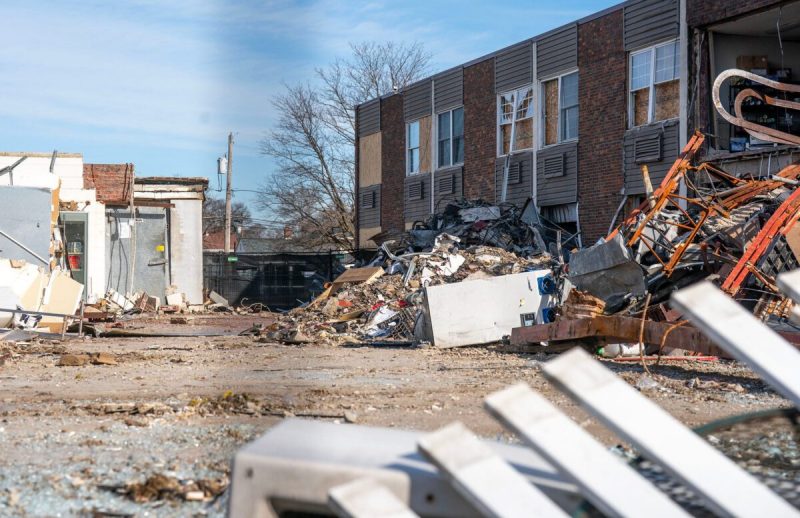
Three people were killed, 19 others injured, and roughly 180 people, most of them residents, were displaced in the December blast that left the two-story building partially collapsed and uninhabitable.
In its preliminary report, the National Transportation Safety Board officials confirmed that a natural gas leak in an indoor meter set valve was responsible for two explosions and the subsequent fire. The NTSB report did not assign fault for the accident, and the investigation is continuing.
Multiple lawsuits filed, so far, allege that employees and residents complained about a strong gas odor hours before the explosion. But they say no evacuation protocols were initiated by staff with either the nursing home or PECO, whose employees were on-site working to repair the leak.
Saber Healthcare Group, which took over the nursing home Dec. 1, maintains that “protocol was followed by our staff” after PECO was notified about a gas smell. But a Saber representative has not responded to several email requests for its evacuation and emergency protocols.
PECO and Saber have also declined to answer questions including why evacuations weren’t initiated, citing their continued involvement in the NTSB investigation.
A pair of Bucks County lawmakers — state Sen. Steve Santasiero and state Rep. Tina Davis, whose districts include the Bristol Health & Rehab Center — said their offices are investigating potential legislative changes to strengthen skilled nursing home safety.
States can adopt additional nursing home regulations beyond what the federal government requires. They have done it in Pennsylvania, setting mandatory minimums for staffing ratios and direct care hours in its roughly 700 skilled nursing facilities.
“Unfortunately, it all too often happens we have a tragedy like this and it exposes where the shortcomings are,” Santasiero said. “This is another example of that.”
What is an emergency preparedness plan, and who can see them?
Federal and state agencies impose strict regulations on skilled-nursing homes, including that they maintain and update annually a comprehensive written emergency preparedness plan to address potential manmade or natural hazards, including contagious illness.
The plans must show the defined staff roles and responsibilities, detailed evacuation routes, designated safe locations, and procedures for physically assisting residents and keeping track of them, according to the rules.
Emergency response plans are also required for the roughly 1,200 personal care and assisted living centers in Pennsylvania. The requirements are virtually the same, but Pennsylvania requires the most updated copies are submitted annually to the local emergency services agencies.
In Pennsylvania, skilled nursing homes must keep copies of the emergency plans at the facility. But they’re generally only required to share them with oversight agencies when requested, which typically only happens during annual inspections for license renewal.
As recently as 2023, though, the U.S. Office of Inspector General urged Pennsylvania health officials to better enforce emergency preparedness plan compliance after federal inspectors found hundreds of deficiencies in 20 unnamed skilled nursing homes.
The Bristol Health & Rehab Center was last cited for an emergency plan deficiency in January 2023 when it was under different ownership and known as Silver Lake Nursing Home.
The state required owners to update the plan to incorporate sewage disposal procedures, according to health department spokesman Neil Ruhland.
While nursing homes regulations don’t “explicitly mandate” sharing emergency plan content with local first responders, they strongly imply it, said Tara Ober, spokeswoman for the Pennsylvania Health Care Association, which represents the long-term care industry.
Federal regulations state that nursing home emergency plans must include a “process for cooperation and collaboration” with local emergency services personnel in an emergency situation.
“While some agencies may not physically have a copy (of a plan), they are involved in its development as they have a role to play in the event of an incident where they would be required to respond,” Ober said.
Firefighters: Advanced knowledge of emergency plans is important
Third District Volunteer Fire Co. is located roughly a mile from the Lower Bucks nursing home, but Chief Howard McGoldrick said his department members had little contact with the previous owners when it was Silver Lake Nursing home.
“When a resident pulls a fire alarm,” he said, “that’s the relationship we have.”
Bristol Township fire officials each confirmed that they don’t have a copy of the written emergency response plan for Bristol Health & Rehab Center. Bucks County also denied a Right-to-Know request seeking a copy of it, on the grounds the county doesn’t possess one.
McGoldrick said his department never had a physical copy of the Tower Road nursing home’s emergency response plan. The last time he was asked to review one was in 2004, which was two owners ago, McGoldrick estimated.
His firefighters also don’t have a physical copy of the emergency plan for Legacy Gardens, the only other long-term care center in Bristol Township, McGoldrick said. But he knows what is in the plan for the 26-bed personal care home off Bath Road.
Every year Legacy’s administrators schedule a review of their updated emergency plan, McGoldrick said. They also maintain regular contact including consulting with firefighters before making changes to the interior of the building.
Emergency calls at long-term care centers are labor intensive and require a larger number of firefighters to work, which makes coordination, communication and preparation crucial, said Scott Little, vice president of the Pennsylvania Career Fire Chiefs Association.
“The response package to a skilled nursing home will require additional resources than what you would see to a single-family home,” Little said.
Nearly a year ago, a single-engine plane crashed and burst into flames in the parking lot of Brethren Village, the largest continuing care senior community in Lancaster.
The plane narrowly missed hitting a three-story building, and residents in the community sheltered in place during the firefighting and rescue operations, said Little, the chief of the Manheim Fire Department, which serves the community.
Five plane passengers were injured, but no one on the ground was hurt.
“Previous planning and relationship building helped to mitigate that event,” Little said.
Those kinds of rare disaster scenarios are where advanced access to emergency response plans would be most beneficial, McGoldrick said. The department can use them to create and practice different scenarios that would dovetail with the guidelines.
Firefighters also could point out potential flaws with the plan and suggest ways to address them, he added.
Initially the firefighters responding to the December explosion didn’t know the total number of people in the building, McGoldrick said.
“An administrator was able to get her laptop and tell us how many were inside and then we had a number to match for a head count,” he said.
An emergency plan would address where staff expect to set up triage areas, and can impact how, and where, incoming rescue and emergency apparatus and vehicles access the scene, McGoldrick said.
A delay in reaching a fire scene costs valuable time, he added.
Where evacuated residents and staff are taken once they are out of danger, plus how they are transported, is also important to know in advance since emergency services can dedicate additional resources, such as school buses or community buildings, McGoldrick said.
Pre-planning in fire services is huge, but it doesn’t work, if all the parties involved don’t know what they’re going to do, McGoldrick said.
“I have a feeling this call is going to change the laws,” the fire chief added. “It should.”