Just spotting the word “police” on an officer’s badge can encourage people to keep their tempers in check or think twice about committing a crime, said John Oast, a security director for the Pennsylvania-based Geisinger Health System.
So as medical professionals across the nation report a worrying uptick in violence on the job, a growing number of the commonwealth’s hospitals are branching into law enforcement. While security teams are standard for health systems, these particular institutions are hardening their defenses with private police forces that carry firearms, hold arrest powers and conduct criminal investigations.
“A lot of these larger health systems have more people in their walls than you have in an entire town. Everything that happens in a community can end up happening within the hospital,” Oast said. “Having a police department or security department can help minimize the threat.”
Experts say behavioral health needs, staffing shortages and pandemic aftershocks are contributing to aggression against health care workers. In Pennsylvania alone, hospital employees report hundreds of injuries each year at the hands of patients or visitors, and advocates say many more verbal or physical attacks go undocumented. Recent acts of violence at Pennsylvania hospitals have caused severe harm and even death.
In February 2025, a man carrying a handgun stormed into UPMC Memorial Hospital in York County, opened fire at employees and took several hostages. A police officer died from a gunshot during the ensuing standoff, and a doctor, hospital employees and other officers were wounded.
A few months later, another man was arrested on charges of beating a nurse unconscious at the UPMC Altoona emergency room.
Oast said on-site police can’t eliminate the risk of violence, but he sees these sworn officers as a layer of protection.
Though these private departments aren’t publicly funded or empowered to patrol the community at large, they do have authority over their own campuses, and hospital officials say their proximity and insider knowledge can pay off in a crisis.
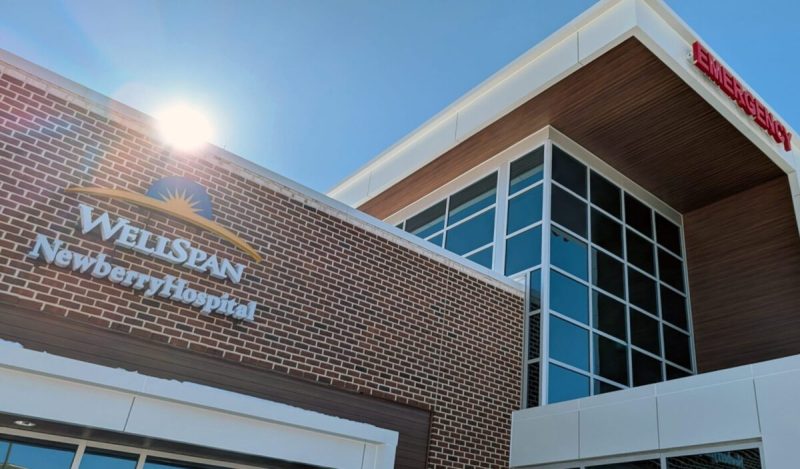
At least seven hospital systems in Pennsylvania run their own police agencies, according to the Hospital and Healthsystem Association of Pennsylvania. WellSpan Health plans to roll out their force later in 2026.
But a private police department might not be the right solution for every health system, security experts say, demanding a significant financial investment and the acceptance of additional legal liability. Others worry about the potential for fractures in the delicate, trust-based relationships between patient and caregiver.
“Workplace safety concerns in hospitals are very real,” said Ji Seon Song, a law professor, at University of California, Irvine, explaining that policing in hospitals has implications for patient care, privacy and autonomy.
“Police presence also muddies communities’ perceptions of hospitals as a place of care versus yet another place where they may be exposed to police surveillance, even as they are in acutely vulnerable situations,” she said.
A ‘significant’ spike in hospital policing
The idea of hospital-based law enforcement is nothing new and dates to the 1970s with the establishment of the Veterans Affairs police department, the nation’s largest of these agencies, said Anthony Pope, president of the International Association for Healthcare Security and Safety. These days, the VA deploys roughly 4,000 officers in sites across the United States.
“But we really have seen a significant emergence in health care-based policing, really over the last five to 10 years,” said Pope, who is also the police chief at Columbus Regional Health in Indiana.
That trend has spread into the commonwealth in the past decade, and now UPMC, Geisinger Health, Allegheny Health Network, Temple Health, Jefferson Health, LECOM Medical Center and Uniontown Hospital all operate their own police forces, according to the Hospital and Healthsystem Association of Pennsylvania.
The association said that list wasn’t exhaustive and noted that WellSpan announced it would be debuting a department in 2026. That agency will be led by a chief with more than 25 years of experience at the Pennsylvania State Police.
Supporters of these initiatives link the move to an escalation in aggression toward health care professionals, who suffer workplace violence injuries at five times the rate of the average employee, according to the U.S. Bureau of Labor Statistics.
Experts say workplace violence data is patchy, since hospital systems tend to track incidents using different methodologies and have different rules for sharing these totals.
However, two-thirds of nurses and health care professionals surveyed in the commonwealth in 2024 reported they personally experienced violence at work, compared to 50% three years earlier, according to the Pennsylvania Association of Staff Nurses and Allied Professionals.
Mike Huss, head of corporate security at Highmark Health and Allegheny Health Network, said he’s been stunned at the amount of mistreatment that health care workers treat as routine.
“It almost was accepted a little bit. It was almost like, that’s part of the job,” the former Pittsburgh police officer said. “Well, no, it’s not part of the job.”
Huss said the health system has come “a long way” in tackling this problem since establishing its roughly 85-officer police department in 2018.
How hospitals build a police agency
A firearm is among the most obvious signifiers of a police officer, said Pope, though he said some security guards also carry guns. The more fundamental difference between sworn officers and security, he said, is that police have power granted by the state to detain someone and carry out criminal investigations for prosecution.
Pennsylvania hospitals with sworn officers tend to be part of a larger health system and are often located in busy, urban areas or places with higher crime rates, said Oast, whose health system has started hiring private police over the past few years.
In some cases, hospitals affiliated with universities leverage campus police departments to staff their medical buildings.
But Pennsylvania law also provides an avenue for nonprofits to establish police agencies with permission from their local Court of Common Pleas. Members of a private force take the Pennsylvania Constitution’s oath of office and then possess “all the powers of a police officer in this Commonwealth” on the hospital property.
Most of the private officers at Allegheny Health Network have past lives in municipal departments, as state troopers or in federal law enforcement and have already been through a police academy, Huss said. Once the health system hires them, they complete a three-week training program on defensive tactics, hospital rules and how to respond to emergency scenarios.
These officers must also complete lethal weapons training and earn a five-year state certification.
Oast said he looks for officers with excellent communication skills who can handle the emotionally charged interactions that are commonplace in a hospital. Enforcing a hospital’s no-smoking policy, for instance, can look a little different if the person with a cigarette reveals they’ve just been diagnosed with a terminal illness, he said.
“In health care,” he said, “when it comes down to the security of it, a lot of it isn’t black and white.”
What can a police force add?
Hospital officers often develop an in-depth understanding of medical privacy laws, patient rights, facility policies and other information that can help them navigate policing in a health care setting, Pope said.
They grow familiar with the hospital’s layout and can rush to a crisis without getting lost or stopping for directions, and their relationships with staff help them coordinate with care providers, he said.
“When you have these officers working as a part of and/or an extension of these care teams … that really does start to drive towards better outcomes,” he said.
Leaders in a hospital-based department often have closer relationships with municipal law enforcement and access to more data on local criminal cases or potential threats, according to Oast. There’s also an upside for the community if hospital-based police can take care of an incident without pulling a publicly employed officer off the streets, proponents say.
Recently, Huss said, a groggy patient got confused while watching news coverage of a violent incident in another state and accidentally reported a shooting at the hospital. The hospital police were able to resolve the mixup quickly without a massive response from other agencies, he said.
Some issues are diverted completely from the 911 lines, since Allegheny Health Network has its own dispatch system that handles calls to a special emergency number for its hospitals, he explained.
That said, Oast isn’t aware of any formal research on whether these sworn police departments improve safety in hospitals, and he acknowledges the model isn’t right for every system.
Training and equipping officers for these departments can be costly, Oast said. An organization must also be prepared to keep sensitive law enforcement records secure and accept the liability of allowing guns and tasers into their facilities, even if employees are the ones carrying them, he added.
In addition, Song said the presence of police in a medical facility could deter some people from seeking care, particularly if they’re “already subject to heightened policing” based on their socioeconomic class or racial identities.
“Without tending to these important considerations,” she said, “instituting hospital police may solve one problem while creating others.”