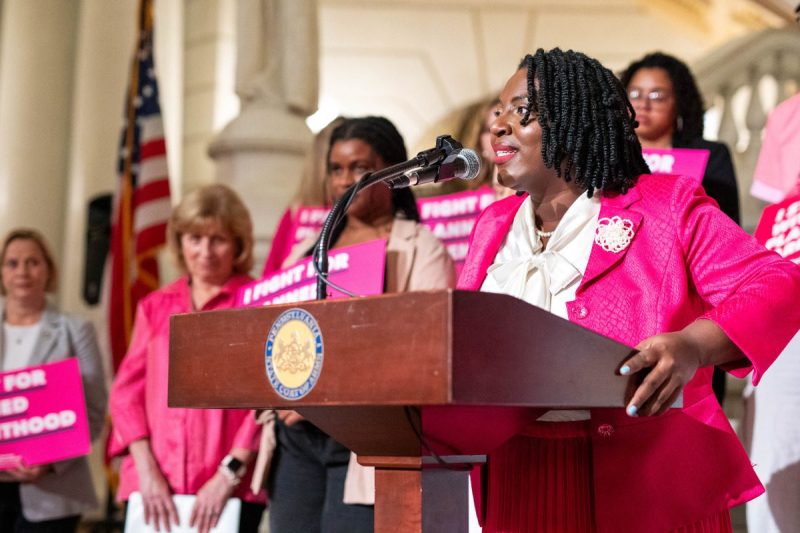
Tuesday marked the beginning of negotiations for the upcoming 2025-26 state budget. The Pennsylvania Women’s Health Caucus laid out their priorities for the budget, which include funding for Black maternal health, expanding childcare access and expanding access to menstrual products for lower-income residents.
Members of the House and Senate returned to the Pennsylvania capitol on Tuesday to kick off a month of hearings looking into Gov. Josh Shapiro’s proposed budget for the 2025-26 fiscal year.
Prior to Shapiro’s budget address, the Pennsylvania Women’s Health Caucus and the Black Maternal Health touted their victories from the previous legislative session, and in a recent letter, they highlighted their priorities for the upcoming year.
“Last year, we made great strides in advancing menstrual equity, investing in maternal health, and supporting many other important initiatives. While we are proud of what we have achieved, we know there are still many critical areas where we can make a difference to help Pennsylvanians,” leaders from the Women’s Health Caucus wrote in a letter.
The letter was signed by the caucus’ four co-chairs, and they include State Sens. Judy Schwank (D-Berks) and Amanda Cappelletti (D-Montgomery) and State Reps. Gina Curry (D-Philadelphia) and Mary Jo Daly (D-Montgomery).
The caucus leaders are advocating for $284 million in new funding to recruit and retain childcare teachers and an additional $42.4 million for childcare and pre-kindergarten programs such as Pre-K Counts and the Head Start Supplemental Assistance Program.
“Both investments will pay off significantly for Pennsylvania, by giving our young learners the resources they need to be successful and ensuring that working parents have access to the childcare they need to allow them to participate in Pennsylvania’s workforce and economy,” the letter stated.
They are also calling on the state to expand access to menstrual products in schools and provide state agencies with the resources to help younger and lower-income residents to access the products at no cost.
Last year’s budget included a $3 million grant program that would place menstrual products in public schools across the commonwealth, expanding access for lower-income and rural students. According to the Department of Education, more than 1,500 schools in Pennsylvania have at least 50% of their students coming from low-income households.
“This budget makes feminine hygiene products available at no cost in our schools because girls deserve to have peace of mind so they can focus on learning,” Shapiro said last year.
The Women’s Health Caucus is also supporting the proposed $28 million to reduce maternal health disparities outlined by the Pennsylvania Black Maternal Health Caucus. A 2021 report from the Pennsylvania Department of Health found that “Black women were twice as likely to die while pregnant, during birth or postpartum, compared to white women in Pennsylvania.”
“I’m directing the Department of Health to work with health care providers across Pennsylvania to implement universal postpartum screenings for moms, train doctors, nurses, and health care professionals on how to more quickly identify postpartum depression, speed up referrals to mental health professionals when a mom is diagnosed and create a resource hub where families can go to find more information – as well as local support networks – for postpartum depression,” Shapiro said during his budget presentation earlier this month.