A Pennsylvania state senator says people who are convicted of felony animal abuse charges should be placed on a publicly accessible registry similar to those who are convicted of sexual assault offenses.
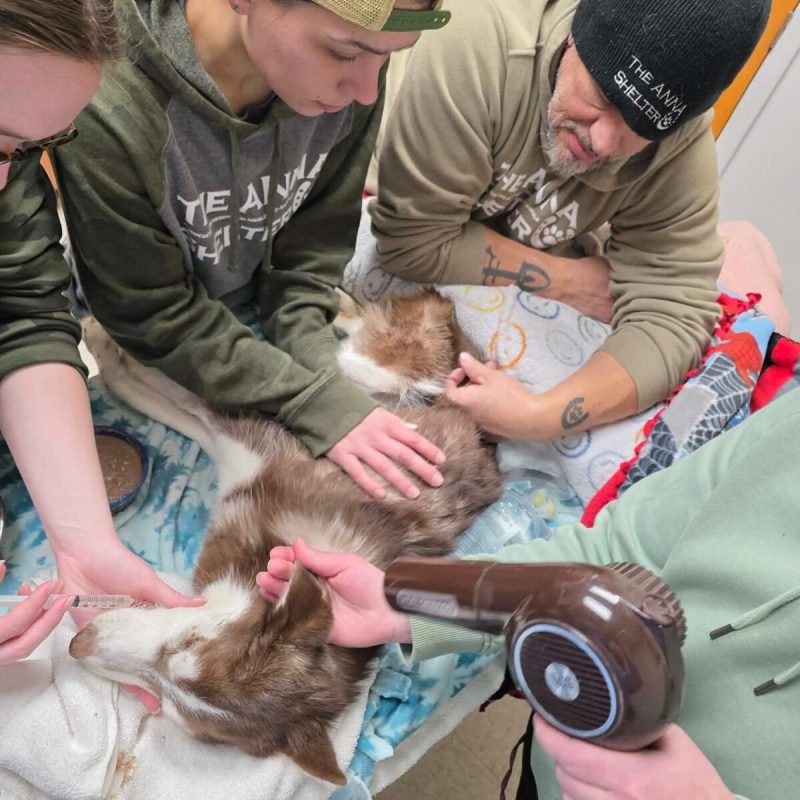
Sen. Dan Laughlin (R-Erie) proposed the framework for legislation Jan. 26, just days after the death of a six-month old Siberian husky that had been left outside in the freezing cold by its owners in Erie County. The dog was named Aimee while in the care of the A.N.N.A Shelter before it died Jan 23.
Laughlin plans to introduce “Aimee’s Law” in coming days.
“This heartbreaking case shows the urgent need for stronger accountability for those who commit cruel acts against animals,” Laughlin said in a statement. “No animal should suffer as Aimee did. Aimee’s Law will give communities a tool to prevent repeat offenses and protect both animals and the people around them.”
Not in vain
A woman brought the frostbitten dog to the Erie Bureau of Police on Jan. 19, when the low temperature reached 14 degrees and there were wind chills as low as minus 11, according to National Weather Service in Cleveland records. She claimed at the time that she had found the dog in its crate under a bridge near Broad and Elm streets in Erie. The dog was believed to be frozen and possibly dead at the time it was taken by police to the A.N.N.A. Shelter.
A day later, the woman recanted her story, telling police the dog belonged to her and her boyfriend and they kept it caged for long periods and could not afford food, according to investigators.
The dog died Jan. 23, despite efforts by rescuers to nurse it back to health.
Tori M. Jackna, 26, and Scott R. Bayle Jr., 23, were arraigned that day on a felony count of aggravated cruelty to animals, misdemeanor counts of cruelty to animals and animal neglect, and two summary charges. Jackna was also charged with a misdemeanor count of false reports to law enforcement.
The registry would include anyone convicted of felony animal cruelty or aggravated cruelty to animals.
Laughlin said it would increase transparency, help police track offenders and enforce penalties for animal abuse. He noted that research has established a correlation between someone with a history of animal abuse and other violent behavior.
“Animals can’t speak for themselves,” he said. “A publicly searchable registry gives families, neighbors and authorities a critical tool to recognize dangerous patterns and prevent future tragedies. Aimee’s death should not be in vain.”
Near and far
The idea is not new. Neigboring Chautauqua County, New York, established an animal abuse registry in 2018. It requires offenders to update their information, including address, every year. It also requires “anyone selling, giving away or adopting an animal to another person in Chautauqua County” to “check the registry prior to any change in ownership.
“Giving, selling or adopting an animal to a person on the registry is a violation of county law,” the registry website says.
Laughlin pointed to Florida’s Dexter’s Law as another example. Dexter’s Law not only strengthened penalties for aggravated animal cruelty in the state, it also established a public, searchable database.
“States like Florida have shown that this approach works,” Laughlin said in his statement. “Aimee’s Law will fill an urgent gap in Pennsylvania’s laws, hold offenders accountable and protect our communities and our pets.”
However, the ASPCA (American Society for the Prevention of Cruelty to Animals), says in a position paper that other measures go further to prevent animal abuse than such registries.
“Although we appreciate that animal abuser registry proposals derive from a genuine motivation to take animal cruelty seriously, the ASPCA believes that this approach does little to protect animals or people and can have unintended consequences,” the organization says. “Existing strategies, such as well-enforced no-contact orders, mandated psychological assessment and inclusion of pets in orders of protection, provide a response that is more effective in preventing harm to animals and people.”
Pennsylvania lawmakers previously enacted one of the recommendations. Act 146 of 2024, which took effect a year ago, gives judges who grant protection-from-abuse orders the ability to grant temporary ownership of a companion animal to the petitioner and it allows the judge to prohibit the defendant from “possessing, abusing or harming” the pet.