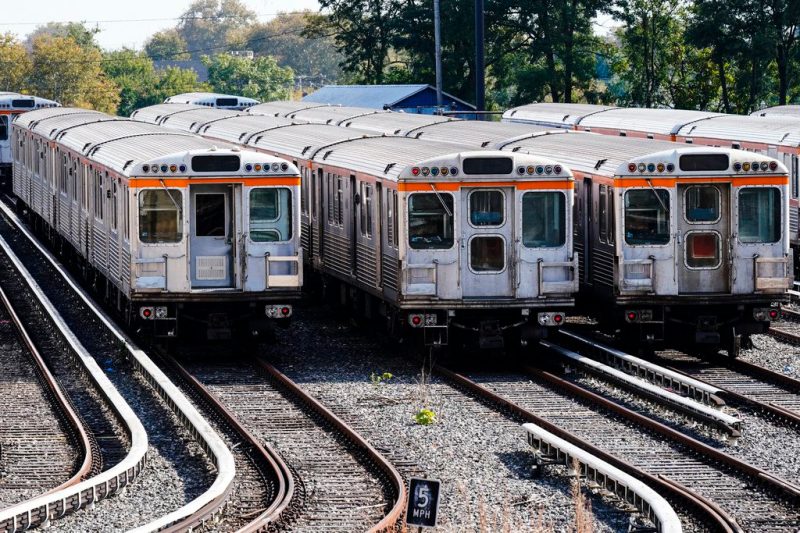
An estimated one million Pennsylvanians rely on mass transit each day in urban, suburban and rural regions.
On Wednesday, House Democrats advanced yet another bill that would increase funding for the state’s mass transit agencies as budget talks stretch more than a month past their June 30 deadline.
But, this time the measure includes several GOP priorities.
The move came on the same day that the Southeastern Pennsylvania Transit Authority (SEPTA) warned that, if lawmakers don’t increase their funding by Aug. 14, severe service cuts will have to be implemented.
The transit agency, which serves roughly 800,000 passengers a day in the Philadelphia region, warned that, without new funding, it faces service cuts of 20%. That would require the elimination of 32 routes, and fewer trips on remaining lines and trains. If funding is not increased after that, further cuts would need to be made, including the elimination of five rail lines and 18 additional bus lines, and the implementation of a 9 p.m. curfew.
Other transit agencies across the state’s 67 counties also face steep cuts, with many serving rural and suburban populations as well. An estimated one million Pennsylvanians rely on mass transit each day in urban, suburban and rural regions. That’s about one out of every 13 people in the state.
“We can’t keep kicking this can down the road,” said House Transportation Committee Chair Ed Neilson (D-Philadelphia). “We’ve been trying to get this done for three years.”
House Bill 1788 is only the latest proposal to emerge in the Democratic-controlled House that would increase funding for transit. It follows Gov. Josh Shapiro’s budget plan by sending an additional 1.75% of the state’s total sales tax revenue s to transit agencies.
But the bill also makes concessions to key demands voiced by GOP lawmakers, who have said that any increase for mass transit funding must be paired with money for roads and bridges, which are essential for transportation in more rural areas. The bill would provide $600 million.
It also borrows from a series of proposals made by Philadelphia Republican Sen. Joe Picozzi, calling on transit agencies to propose public-private projects, and meet new standards to address issues like fare evasion. The state could withhold funding from transit agencies that fail to do so.
The measure passed out of the Transportation Committee on a 16-10 vote, with two Bucks County Republicans, Reps. Shelby Labs and Kathleen Tomlinson, joining all Democrats in supporting it.
The committee’s minority chair, Rep. Kerry Benninghoff (R-Centre), opposed the bill.
“It’s not that we’re not empathetic,” he said, acknowledging the dependence of many Pennsylvanians, especially in the Philadelphia area, on mass transit. “The state has been spending more and more money on mass transit … How much will be enough?”
House Majority Leader Matt Bradford (D-Montgomery) told reporters after the vote that the full chamber is prepared to convene soon to pass the measure, but did not provide an exact date.
The move puts greater pressure on Senate Republicans, who have said they will not act on a budget that doesn’t take steps to address the state’s structural deficit.
Spokespeople for Senate Majority Leader Joe Pittman (R-Indiana) and Senate President Pro Tempore Kim Ward (R-Westmoreland) did not respond to requests for comment before publication.
In previous statements, Pittman has said that progress is being made, but House Democrats and Senate Republicans remain divided.
Earlier this week, City & State Pennsylvania reported Ward said she would support a short-term budget, allowing the state to fund school districts and local governments that could face consequences if a state budget isn’t passed soon. It would also give lawmakers more time to work out their differences on a complete budget.
“Gov. Shapiro’s $51.5B budget proposal increased spending on education & transit — but left a $2B hole for Medicaid expansion and relied on revenue streams that don’t exist,” Ward said in a social media post Tuesday. “That’s a tough starting point.”
As Democrats have warned of increased need for funding education, transportation and the state’s share of Medicaid, House Democrats and Senate Republicans have struggled to agree on where to cut state spending or find new revenue.
Leaders in the Senate GOP have said a Democrat-backed proposal to legalize and tax recreational cannabis is almost certainly off the table as a new revenue source in this year’s budget, despite some Republican support. And disagreements remain over how or whether to regulate so-called skill games, slot machine-like games that have proliferated in stores and restaurants across the commonwealth.
House Democrats have touted the number of bills they’ve sent to the GOP-controlled Senate, though any budget will ultimately have to be agreed to by both chambers and the governor.