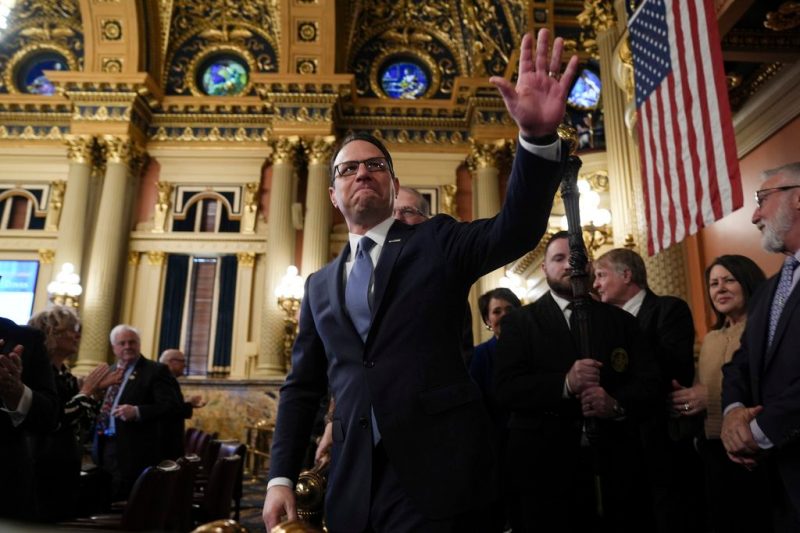
Gov. Josh Shapiro’s proposed state budget includes an additional $526 million to close the education funding gap between poorer and wealthier school districts. It also calls for capping cyber charter tuition at $8,000 per student.
During his third budget address in office, Pennsylvania Gov. Josh Shapiro vowed to double and triple down on the investments he’s made in public education during his first two budgets.
“Over the last two years, we haven’t shied away from hard conversations or solving complex problems. Case in point, how we reformed the way we fund public education, Shapiro said during his address.
“We knew that was a problem and we agreed the old system was unconstitutional. So last year, we made a commitment to not only invest a record amount of money in public education, but create a brand new formula that drives that money out to the schools that need it most.”
Shapiro this week proposed an additional $526 million to close the funding gap between the commonwealth’s poorer and wealthier school districts, as well an additional $75 million for basic education spending and $40 million more for special education.
Education advocates recently called on Shapiro and lawmakers to add $1 billion per year over the next four years to the education budget in order to close the education funding gap.
“Last year, Gov. Shapiro and lawmakers from both parties collaborated to take a historic first step to fix Pennsylvania’s unconstitutionally broken public school funding system,” Aaron Chapin, President of the Pennsylvania State Education Association, said in a statement. “This budget proposal represents a starting point for continuing this necessary work, and PSEA looks forward to working with the governor and the Legislature to enact a final state budget that provides as much of a funding increase as possible for our public schools.”
The money to close the education funding gap stems from a 2023 Commonwealth Court ruling which found that Pennsylvania failed to meet its constitutional obligation to adequately fund public education.
Shapiro’s budget also includes calls for cyber charter school reform by capping tuition rates for students at $8,000 per student per year, which would save taxpayers and school districts $378 million annually.
There are currently 14 cyber charter schools in the commonwealth and their regular tuition rates range from $7,659 per student to $28,959 per student. That range increases to $18,627 to $59,523 for special education students.
Education advocates from PA Schools Work, a coalition of 17 organizations from across the commonwealth, praised Shapiro’s public education proposals, calling them a starting point for the legislature going forward.
“The final budget agreement must include, and in many cases exceed, the other educational investments and reforms outlined in the governor’s budget,” John Nuerohr, a spokesperson for PA Schools Work said in a statement.
“These include additional investments in basic education and special education to protect schools from inflationary cost increases, career and technical education, school facilities, pre-K, and more. The proposed reform to cyber charter tuition payments must be non-negotiable, since without it the increases in other funding line items don’t keep pace with inflation in most school districts.”