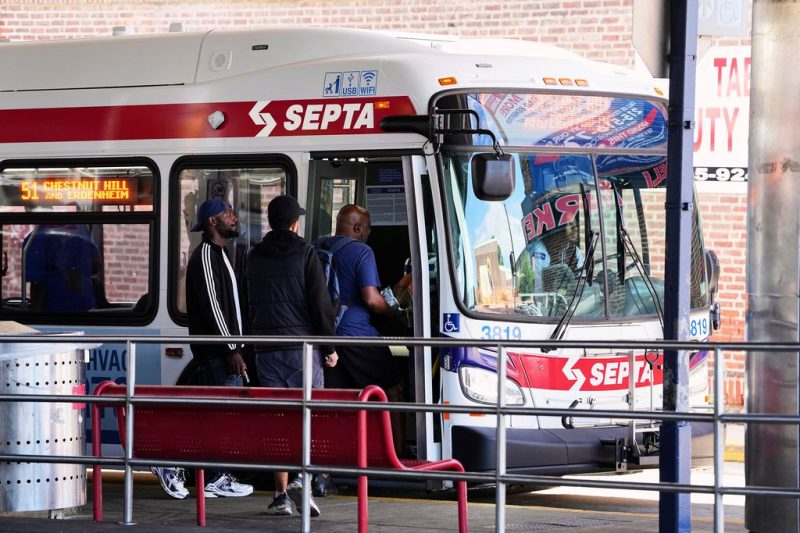
After a months-long state budget impasse that resulted in no new recurring funding for mass transit agencies, Gov. Josh Shapiro announced Monday that he’s sending an additional $220 million to the Southeastern Pennsylvania Transportation Authority (SEPTA) to fund repairs and infrastructure projects meant to improve safety.
The money will come from the Public Transit Trust Fund, which is broadly used for capital projects, and will be used in part to comply with federal mandates following a series of fires on SEPTA railcars.
“800,000 riders depend on SEPTA every single day, including 55,000 students who rely on SEPTA to get to school,” Shapiro said at a press conference Monday in Chester County. “… Mass transit is critical to our commonwealth’s success, it is critical to our commonwealth’s economy, and it’s critical that we invest in it.”
SEPTA is the largest mass transit authority in Pennsylvania. Earlier this year, its leaders warned that the agency was entering a “death spiral” unless lawmakers could find a new source of funding.
Ultimately, the Shapiro administration directed funding from the state’s Public Transit Trust Fund to SEPTA to keep the transit authority afloat. However, many Democratic state lawmakers and mass transit advocates say a long-term solution — and more money — is still needed.
The $220 million Shapiro announced for SEPTA today, the second major investment in a matter of months, will be used to repair and maintain its existing fleet, purchase new equipment, upgrade infrastructure in SEPTA stations, and replace catenary wires for trolleys and railcars.
SEPTA General Manager Scott Sauer said the projects are necessary to “overcome the current crises” and “prevent problems moving forward.”
“We’re looking at every mile of infrastructure, each railcar, bus and all the other equipment that SEPTA runs to make sure we are putting out safe and reliable service each day,” he added.
SEPTA had already been carrying out a series of safety improvement projects following an emergency order from the Federal Railroad Administration after an investigation into five fires on Silverliner IV railcars used by the transit authority which had passengers on board.
A long fight over transit funding
When budget negotiations began in February, mass transit funding was a key point of disagreement at the state Capitol between Democrats, who have a large Philadelphia-area caucus, and Republicans, who are more likely to represent rural parts of the state and object to increases in recurring spending.
Shapiro and Democrats had pushed to increase the share of sales tax the state directs to transit authorities in all 67 counties, which cover urban, rural and suburban areas. But Republicans in the state Senate ultimately blocked those efforts, citing, in part, failures by the largest transit authorities to tackle issues of crime and fare evasion.
Roughly 1 million Pennsylvanians — about one in 13 people in the state — use mass transit every day across the commonwealth.
“Sadly, the Republicans who lead the Senate have been unwilling to come up with a deal to deliver reliable, recurring funding for mass transit,” Shapiro said at Monday’s press conference. “That left SEPTA in a position earlier this summer where they didn’t have enough funding for their operating costs at their operating service levels.”
While budget negotiations dragged on last summer, SEPTA announced a series of fare raises and service cuts to offset what they called a lack of state funding. However, the Court of Common Pleas blocked the proposed cuts to bus and rail service, saying they disproportionately impacted low-income and minority riders..
The Shapiro administration then directed $394 million in capital projects funding to SEPTAy, effectively ending the fight over new transit funding in the 2025-2026 state budget.
It was a victory for Republicans, who had pushed to fund the state’s transit authorities with money from the Public Transportation Trust Fund, which they said contained more money than necessary for just the capital projects it was intended for.
“We have been consistent in recognizing the value of transit while making it clear investments by taxpayers need to include reasonable accountability measures,” Sen. Majority Leader Joe Pittman (R-Indiana) said in a statement Monday. “It was not until our transparency efforts shed light on the massive fund balance that the Governor’s hand was forced to finally make these resources available for their intended use.”
But SEPTA and other transit authorities say the solution was only a stopgap, and are continuing to push for a new source of recurring revenue that will keep them afloat into the future.
“For the second year in a row, Gov. Shapiro has stepped up and offered a lifeline to public transit in the southeast,” said Sauer.
In 2024, Shapiro unilaterally diverted $153 million in federal highway to SEPTA, a move that Republicans in the statehouse objected to.
Shapiro was also joined Monday by Democratic allies, such as Philadelphia Mayor Charelle Parker, Senate Appropriations Chair Vincent Hughes (D-Philadelphia) and House Transportation Chair Ed Neilson (D-Philadelphia).