Republican-backed cuts to the SNAP program could hit nearly 144,000 Pennsylvanians and send a ripple effect through farms and small businesses. Here is one small farmer’s story.
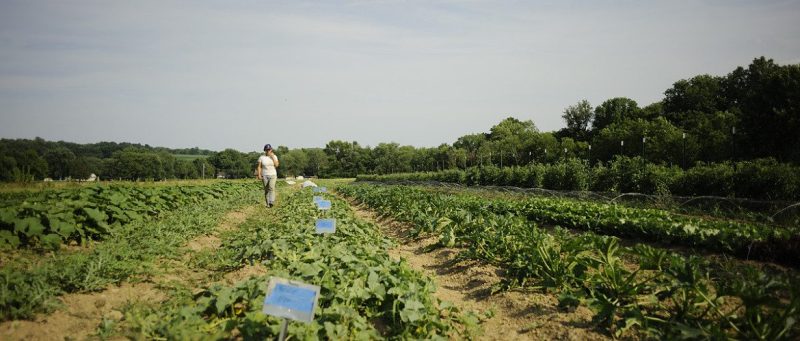
On a recent afternoon at Root Mass Farm in Bally, Lindsey Shapiro crouched down to check a row of potatoes that were ready for harvesting.
“These are fingerling potatoes,” Shapiro said. “We’re going to start digging them for market tomorrow, probably.”
Shapiro is the co-owner of a small vegetable farm she runs with her husband, Landon. They sell their products at farmers markets throughout the local area. The recent cuts to federal programs such as the Supplemental Nutrition Assistance Program (SNAP), thanks to President Donald Trump’s “big beautiful bill,” have Shapiro a little worried. She’s seen how the cuts are already affecting families, and small businesses like hers.
“I see customers thinking about whether they want to use their SNAP dollars on fresh produce, or if they want to get something that’s going to keep in the fridge or the freezer, or something that’s a canned good that’s non-perishable, because they don’t necessarily know what their food budget is going to look like,” Shapiro said.
How it affects the commonwealth
Every month, more than $365 million in federally funded benefits come into the state and is used to feed families, while also sustaining more than 10,000 grocery stores, 53,000 farms, and local food businesses.
Republican-backed cuts to the program could hit nearly 144,000 Pennsylvanians, according to Gov. Josh Shapiro’s administration (no relation to Lindsay and Landon Shapiro). And because every $1 billion in federal SNAP spending generates $1.54 billion in economic activity, the harm doesn’t stop at the checkout line. It ripples through farm fields, corner stores, and small-town main streets.
“The dramatic cuts to SNAP that we saw in the budget reconciliation bill have a significant impact on our farm’s bottom line,” Shapiro said. “We are already seeing people scale back in the amount of dollars that they’re willing to spend. They’re worried about their household finances, and they don’t know if fresh produce is in the budget anymore.”
Shapiro worries about what that means not only for her customers’ nutrition but for the future of Pennsylvania’s local food system.
For her, the connection between farmer and consumer is sacred. But right now, it feels under siege.
“We’re already thinking about whether there’s going to be enough government dollars circulating in that neighborhood to be able to do the farmers market next year,” she said.