Ryan Sprankle says his western Pennsylvania grocery stores definitely ended 2025 on better financial footing than they entered it.
Sales numbers were looking good for Sprankle’s Neighborhood Market as the holidays approached, and he said grocery costs seemed to have stabilized after several years of soaring inflation. With the drop in egg prices, he said his stores were about to launch a deal of $3 for two cartons.
Given the complexity of the economy, it’s hard for the grocery store operator to gauge exactly how much credit President Donald Trump and his policies deserve for ushering in these shifts over the first year of his term. But Sprankle argues the Republican commander-in-chief should get at least some recognition.
“The leader should be the person to get the most heat when things go wrong,” he said. “And they should be the person to get the most credit when things go right.”
Affordability was top-of-mind for voters in the 2024 presidential election, with more than 95% of respondents in one survey reporting that the rising cost of gas and food helped shape their ballot decisions. Trump hammered on grocery bills throughout his campaign against then-Vice President Kamala Harris, bemoaning the expense of everyday staples like eggs and milk.
“We’ll get them down,” Trump said of food prices during a campaign stop at Sprankle’s Kittanning store in September 2024.
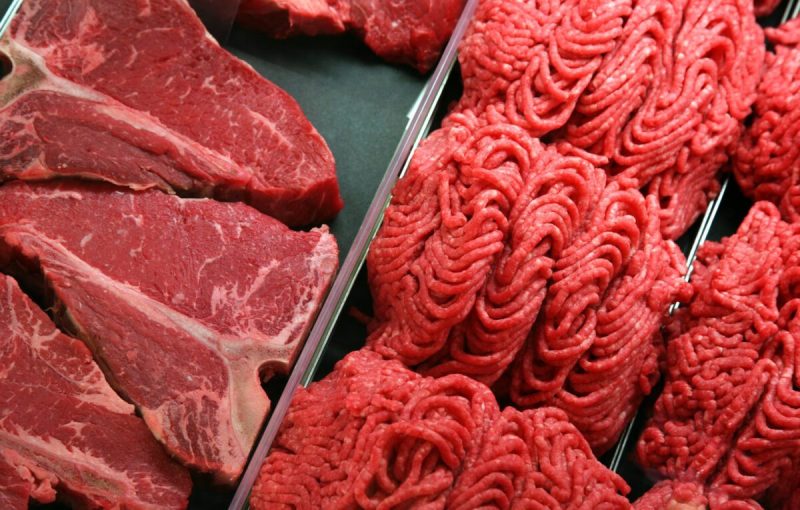
But as Trump marks one year in office, economic indexes show the cost of groceries remains high. There has been a dip in the price of certain products, most notably eggs, as the worst ripple effects of the avian flu subside. However, beef and coffee costs have soared, and the overall food prices were 3.1% higher in December than a year earlier, according to the U.S. Bureau of Labor Statistics.
Exiting a Chester County Walmart with groceries in tow, Mollie Jasudowich said inflation has thrown her budget “way out of whack,” even though she’s shopping only for one. Affordability has been a persistent problem, she said, and she doesn’t think it’s gotten better under Trump.
“I don’t know how people would be doing it with a family and children,” she said. “It’s so terribly expensive.”
Here are several perspectives — from different points along Pennsylvania’s food supply chain — on whether Trump has delivered on his promise to rein in grocery costs.
Farmer
Nationwide, beef farmers were hit by myriad challenges in 2025, from the smallest herd in 75 years to market volatility brought on by evolving political policies.
Trump’s announcement in late 2025 that he planned to quadruple beef imports from Argentina to help meet consumer demand and lower prices created even more uncertainty and caused beef futures to fall “significantly,” the U.S. Cattlemen’s Association said at the time.
“When Washington pushes policies that flood the market with imported beef, it sends a crystal-clear message to every American rancher: ‘Don’t invest.’ We cannot rebuild our domestic herd if every signal we receive tells us we’ll be undercut by foreign supply,” USCA President Justin Tupper said in a statement on Nov. 21. “Our members believe in fair market competition, but they also believe in long-term survival.”
Vince Humes of Humes Pride Farms in southeastern Erie County has been mostly immune from the instability. Humes’ small farm operation in southern Erie County sells beef and pork directly to consumers who prefer better quality and to buy in bulk.
But it might not stay that way for long.
Despite Trump vowing during the campaign to address inflation, Humes’ input costs for things like fertilizer for his hay fields and equipment have skyrocketed. If they don’t stabilize or drop, Humes might be forced to pass those increased costs onto his customers.
“A ton of fertilizer is ridiculous,” he said. “I haven’t seen anything that says it’s going to come down any time soon. We’re trying not to raise our own prices but we know prices are going up on our inputs. I don’t know how long we can weather that.”
In 2025, he had hoped to buy a pre-owned skid steer in the ballpark of $20,000, but paid more than $30,000.
Humes is at least the third generation to operate the family business, which was previously a dairy farm. He leases land to another farmer for a soybean crop and uses a portion of it for oat and hay balage and silage, which he sells to other small beef producers.
The price of plastic wrap to make hay bales is also up, he noted.
“The plastic wrap to make balage is increasing in price, making the margins on each bale smaller as we compete with folks not regenerating their hay and low-balling the price per bale,” he said.
Inflation isn’t just a short-term worry. Next year, he anticipates having to buy a new herd bull.
“We have between 25 and 30 head on the farm at any given time,” the 68-year-old Humes said of his cattle. “We are raising them from birth to slaughter. We try to eliminate buying except for our herd bull. When we do buy it is usually registered animals so we get a look at the bloodline — genetics matter.
“We will have to replace the herd bull in 2027,” he continued. “I’m hoping I won’t suffer from sticker shock, but at the price of cattle, I should probably prepare to pay significantly more this time around.”
Humes was a Republican for 40 years until Trump’s emergence in 2016. He recently switched parties and is now a registered Democrat.
“He probably has delivered on many of them, whether I like them or not,” Humes said, “but I don’t think any of his campaign promises have positively affected our business.”
Grocery store owner
Sprankle is mostly happy with the economic shifts during Trump’s first year in office. Still, there have been a few bumps.
Health care costs have continued to climb, and tariffs have pushed up the price of larger grocery store equipment, he said. He noticed it while shopping for a meat scale and bakery oven this past year, finding that vendors had to increase their quote after the import taxes kicked in, he said.
Sprankle said he ended up buying the equipment second-hand to avoid the price hike. But he sees this as a temporary solution and is crossing his fingers that tariff effects taper off before he needs to make future purchases.
Then, there was the federal government shutdown, when the Trump administration abruptly announced it didn’t have the funds to issue nutritional assistance to low-income Americans. The grocery benefits lapsed at the start of November, and payments weren’t fully restored until the middle of that month.
About a quarter of the customers at Sprankle’s Kittanning store depend on this assistance to put food on the table, and Sprankle said he was especially worried for the children in these families.
“I think leveraging and using people that are most susceptible in our world or country as pawns in the game is just a terrible, just filthy thing to do,” he said of D.C. politicians.
Sprankle doesn’t assign Trump all the blame for this lapse in aid, though, arguing that Republicans and Democrats in Congress are also responsible for the shutdown brinksmanship.
Aside from policy positions, though, Sprankle appreciates Trump for his doggedness — a quality he finds inspiring as a small business owner in a challenging industry. His father, the original owner of Sprankle’s markets, always told him there are “10,000 things that can go wrong” in a grocery store each day, and as long as he could prevent 9,500 of them, he’d be OK.
But going through a checklist that long gets exhausting, he said. That’s why he says he and other rural business owners find Trump inspiring, with the president’s ability to bulldoze obstacles and to keep pushing forward despite the hits.
“You look at that, and you say, ‘Wow, if he could get through all that, I can get through this meat case being out of commission for a day,’” Sprankle said. “Or, ‘I can get through my electric bill going up 15%.’ It gives a lot of people strength and hope.”
Shoppers
Jasudowich says it’s getting harder to shop for organic foods, beef and other meats, and while she was browsing Walmart in mid-January, she was shocked to spot a loaf of bread that cost $7.
She doesn’t anticipate these cost pressures will alleviate, predicting that tariffs will only continue to push up food prices.
The Coatesville resident, who said she’s never been a Trump supporter, isn’t surprised that this is the reality one year into his administration. His policies were foreseeable from the campaign, she says.
“The way he talks, people don’t believe him for some reason,” she said. “They give all kinds of excuses for what he’s saying, but it’s happening.”
John Moran, another Walmart shopper, echoed Jasudowich, saying he hasn’t noticed any relief from high prices since Trump took office Jan. 20, 2025. He feels the pinch acutely during the winter, when he has to pause his job as a road construction worker and relies on unemployment to tide him over until the weather warms.
Moran said he ends up shopping around at Costco, Walmart and Aldi to track down the best deals, but saving money this way is a significant time investment.
“You’re killing your day,” the Glenmoore resident said.
Politicians on both sides of the aisle have lost Moran’s trust, he said, adding that they all make big promises on the campaign trail but get comfortable when they’re in office. In that respect, Trump has been no different from the rest, he said.
“Their focus is on other things that are not concerning the American people,” said Moran, who said he stopped voting years ago.