The thermometer doesn’t always tell us how cold it feels outside.
An Erie man came up with a formula that does.
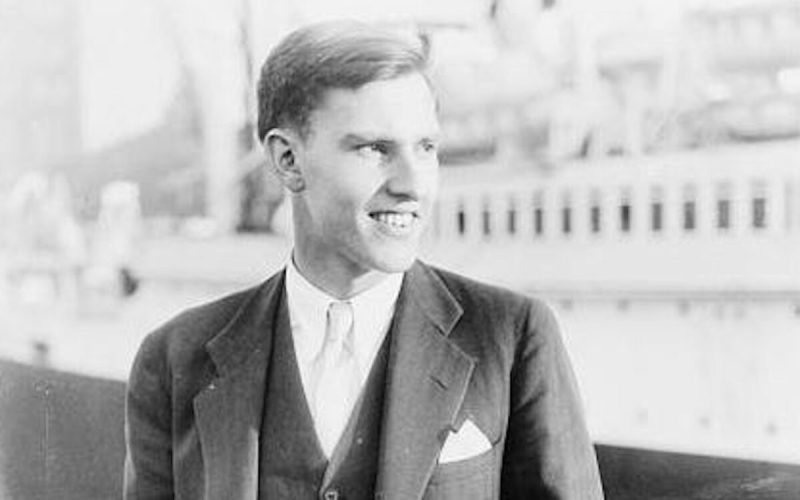
Wind chill, or how cold it actually feels based on the combined intensity of cold and wind, was first calculated by Paul Siple at the South Pole in 1945.
Polar explorer and geographer
Siple grew up on West Fifth Street in Erie. He was 19 years old when he was chosen to participate in Richard Byrd’s Antarctica expedition in fall 1928 through spring 1930. Byrd had invited Eagle Scouts across America to apply for the expedition and chose Siple based on his essay and fitness test.
Siple later graduated from Allegheny College and became a U.S. Army major. He was a polar explorer, scientist and U.S. scientific attaché to Australia and New Zealand.
He was featured on the cover of Time magazine in 1956 for leading the first party to winter at the South Pole.
The Siple Coast and Siple Island in the Antarctic are named in his honor.
Siple died at age 59 in 1968. A Pennsylvania historical marker bearing his name and accomplishments stands outside the Erie Maritime Museum.
Calculating wind chill
Siple calculated wind chill based on the temperature and how quickly water freezes in plastic cylinders hung 33 feet from the ground.
His formula was used by the National Weather Service for more than 50 years.
It was later determined that more accurate calculations of wind chill are based on temperature, wind speed taken at “face level” and the loss of body heat.
The revied formula was adopted by the National Weather Service in 2001.
“As the wind increases, it draws heat from the body, driving down skin temperature and eventually the internal body temperature,” according to the National Weather Service.
At a temperature of 0 degrees with a 15 mph wind, the wind chill is minus 19 degrees, cold enough to freeze exposed skin in 30 minutes.