The governor spoke at a book tour launch event while demonstrators protested his inaction amid growing fears about federal immigration enforcement tactics.
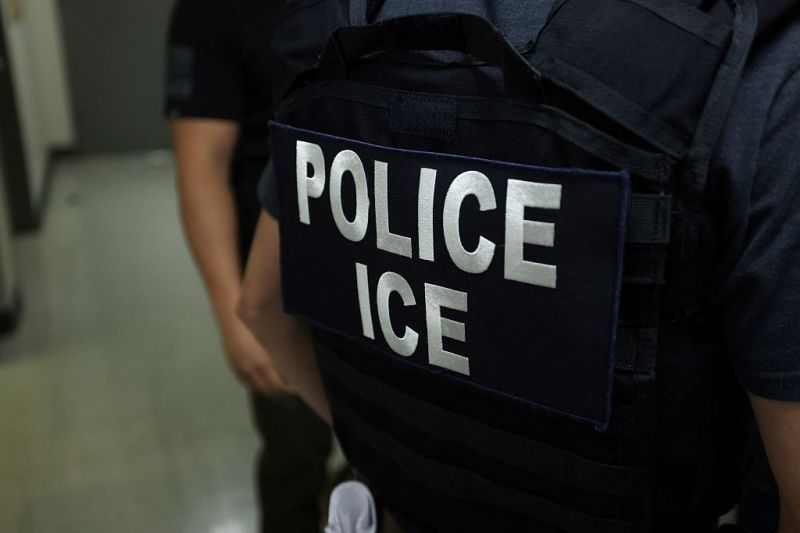
Gov. Josh Shapiro addressed mounting fear about immigration enforcement tactics Saturday hours after federal agents shot and killed another person in Minneapolis amid escalating confrontations with the city’s residents, government and public safety officials.
“What we are seeing in Minnesota is absolutely unacceptable,” Shapiro said. “It is so dangerous, not just for Minnesota, but for the entire country … What’s happening in Minneapolis could happen here in Philadelphia, or in Pittsburgh, or in Lancaster, or in other communities across our commonwealth. And I will just tell you this: We are prepared for that.”
Shapiro spoke in response to a submitted question about what he’s doing to keep Pennsylvanians safe from Immigration and Customs Enforcement during a book signing at Parkway Central Library in Philadelphia. Just outside, on a historically cold afternoon, hundreds of people rallied in protest of ICE’s surge in several states in recent months – and what they’ve said has been silence and inaction from the governor as he launches a re-election campaign. Shapiro is also mentioned as a potential Democratic candidate for president.
Andrew Lefkowitz, of Montgomery County, came into the city for the event organized by advocacy groups including the Pennsylvania Immigration Coalition and Council on Islamic Relations.
Lefkowitz, 32, said he wanted to protest the governor “not really doing much about ICE in Pennsylvania.” Although, the inaction isn’t limited to Shapiro, he added.
“Democratic leadership … they’re throwing up their hands and saying, ‘Oh, well, you know, not much we can do. We’re doing our best,’” said Lefkowitz, an activist who’s been helping people and their families find legal assistance and other support when they’re arrested by ICE. “They’re trying to play by the rules. And Trump is throwing the rules out the window.”
Lefkowitz said he felt a particular sense of urgency Saturday after learning a U.S. Border Patrol officer had shot and killed 37-year-old intensive care unit nurse Alex Pretti in Minneapolis. It was the second fatal shooting since the Department of Homeland Security started deploying thousands of immigration officers last month to the Twin Cities region and beyond.
Last week, the death of 37-year-old Renee Good was ruled a homicide. And details emerged about the DHS memo laying out a legal argument to justify warrantless forced entry to people’s homes.
Shapiro said Saturday his administration is doing “tabletop exercises” and planning.
“We are working with our partners at the local level and where we can at the federal level to ensure their safety, and to ensure that we can continue to keep and build bonds and trust that exist, … and not have it eroded by the federal government sending in ICE against the wishes of the mayor or against the wishes of the governor,” he said.
Shapiro also said “we do not do ICE’s work for them here in Pennsylvania.”
“Our state police [don’t] ask for people’s status and we do not share any of that information with the federal government,” he said.
Advocates, however, have flagged a couple loopholes in the Pennsylvania State Police’s civil immigration law enforcement policy that they say need to be closed, which would all but sever communication with ICE. It’s one in a list of executive actions they say the governor should take to protect immigrants and the general public amid the Trump administration’s enforcement surge.
Meanwhile, dozens of the commonwealth’s other law enforcement agencies – local police, constables and county jails and sheriffs departments – have contracts formalizing ICE cooperation.
Known as 287(g) agreements, they delegate to local law enforcement ICE tasks and responsibilities that differ depending on the type of agreement in place. The most common one among Pennsylvania law enforcement agencies, by far, is a task force model. It affords the most authority of three 287(g) types, empowering trained officers to carry out enforcement actions such as making civil immigration arrests, collecting evidence for deportation cases and issuing requests to other agencies to detain people for suspected immigration violations.
Those agreements would be banned or restricted by proposals being developed in the state legislature modeled after laws already in place in some other states.
John Cole, a freelance reporter, contributed to this story.