“I haven’t talked to a single person who feels like their job is safe.”
After the U.S. Supreme Court ruled through its shadow docket earlier this month that President Donald Trump could move forward with plans to fire tens of thousands of federal workers, U.S. government employees across Pennsylvania braced themselves.
Philip Glover, the national vice president of the district of the American Federation of Government Employees that covers Pennsylvania and Delaware, says thousands of employees have likely been laid off around the country since the ruling, though exact numbers haven’t been shared with unions yet.
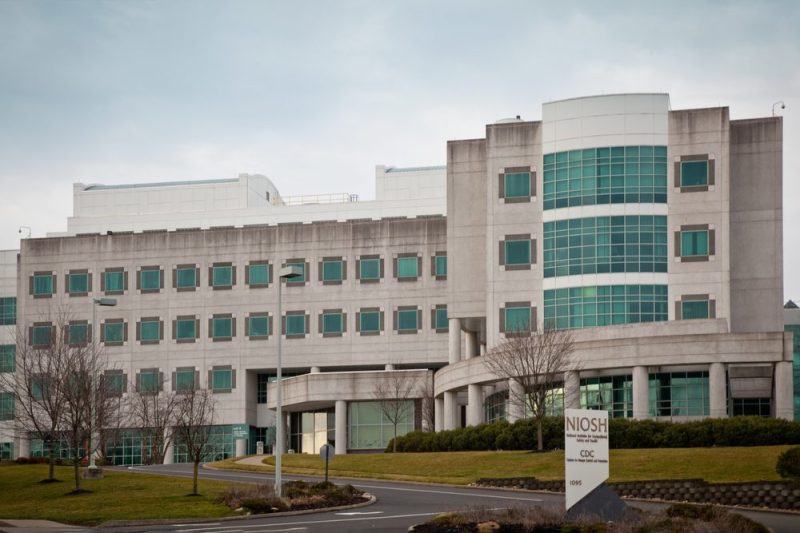
But for employees at the Pittsburgh-area campus for the National Institute for Occupational Safety and Health (NIOSH), a division of the Centers for Disease Control and Prevention, which is under the U.S. Department of Health and Human Services, the ruling only added to a sense of uncertainty that workers say has become a constant of employment under the Trump administration.
“It’s been the entire range of human emotion,” Suzanne Alison, a steward at the local chapter of the American Federation of Government Employees and a NIOSH employee, told the Capital-Star after the ruling. “I haven’t talked to a single person who feels like their job is safe.”
While the Supreme Court ruling allowed the Trump administration to move forward with thousands of previously stalled layoffs, the U.S. Health and Human Services Department (HSS) is tied up in a separate lawsuit moving through a federal District Court in Rhode Island.
Filed by Democratic attorneys general in 19 states and Washington, D.C., the suit argues that layoffs at key divisions of the Health Department, including NIOSH, are being conducted illegally. The judge in that case, Melissa DuBose, has ordered that, for now, the department has to keep those workers until the case moves forward.
The state of Pennsylvania is not part of the lawsuit.
The NIOSH facilities in Allegheny County house two key teams, whose impacts are felt across the country. There’s the coal mine safety division, which houses researchers and scientists studying how to prevent fatalities and injuries in coal mines. And there’s the National Personal Protective Technology Lab, which certifies the nation’s respirators, from the N95 masks that became ubiquitous during the COVID-19 pandemic to specialized devices used by firefighters and Marines.
Employees on both teams, with more than 160 federal workers between them, now feel stuck in a holding pattern.
“It feels a lot more precarious.”
For Pennsylvania-based NIOSH employees, nothing has been normal since the beginning of the Trump administration’s efforts to slash the federal workforce. There were the layoffs of probationary employees (workers who have been with the agencies less than one or two years), buyouts and offers of early retirement, and the reduction in force notices, which alerted employees across both divisions that many jobs would be terminated this summer.
A series of lawsuits held up various parts of the downsizing efforts. And federal lawmakers from both parties raised alarms about the impacts of cuts to divisions ensuring the safety of miners.
At a hearing on Capitol Hill in May, Health and Human Services Secretary Robert F. Kennedy Jr. assured lawmakers that “work on mine safety will continue.” Yet employees of the Pittsburgh mine safety team largely remain on administrative leave, and notices that their jobs will be terminated July 2 remain in effect, though layoffs have been held up by lawsuits. Until the Rhode Island judge rules or HHS reverses course, no one can be laid off.
There were other decisions that impacted their ability to work too. The department, for instance, instituted a communications freeze and a block on work-related travel earlier this year, and credit cards were frozen that were typically used to purchase necessary research materials.
With so many people remaining on administrative leave, many affected mine safety workers are coming into work on a voluntary basis. Brendan Demich, chief steward of the American Federation of Government Employees (AFGE) local chapter that represents the Pittsburgh-area NIOSH employees, and an employee of the coal mine safety division, says morale has dropped.
“It’s really hard to do anything,” he said. “It feels a lot more precarious right now.”
Still, some are continuing their work.
Demich’s own team, which is working on a virtual reality training program for mine safety teams, has cut its ambitions and is winding down their work. Now, they’re getting what they can to industry partners in the hopes it can still prove useful.
“These are all people who have been laid off, told they can take administrative leave—basically a paid vacation—and there are still people going into work, essentially voluntarily,” he said.
Employees at the National Personal Protective Technology Lab have had a slightly different experience. In April, many were preparing for their lab — the only one in the country certifying respirators for NIOSH — for permanent closure. Yet, following a May ruling on a class action lawsuit in West Virginia, they learned that the decision to shutter the division had been reversed.
But even those workers have not been able to feel a sense of security. That same month their layoffs were reversed, HHS released a proposed budget for 2026 which listed their division among those having their funding cut.
The coal mine safety team employees, who are still subject to layoffs pending a court ruling, found the opposite. The broader mine safety division would remain funded under the proposed 2026 budget.
Employees in both NIOSH divisions in Pittsburgh, as well as their union representatives, say they’ve sought clarification from leaders at the U.S. Health and Human Service Department, NIOSH, and the Centers for Disease Control and Prevention (CDC). But they’ve been met with silence.
Spokespeople for HHS and the CDC did not respond to questions from the Pennsylvania Capital-Star seeking clarity.
“We haven’t had anything communicated to us through official channels,” said Demich. “Our division leader is communicative with what they know, but there’s a breakdown of communication from the higher levels of HHS. Our division leaders are finding things out about the same time our front line employees are.”
Democratic congressmen from Pennsylvania have also weighed in, with all seven in the 17-member House delegation signing onto a letter last month asking the agency to reverse its decision to lay off people in the mine safety division.
In recent weeks, lawyers for Health and Human Services moved to have the case blocking layoffs across NIOSH dismissed, arguing the U.S. Supreme Court ruling allowing the Trump administration to fire thousands of federal workers applied to them as well. The judge shot down the argument.
HHS lawyers also argued earlier this month that layoffs should be allowed in states like Pennsylvania that are not a party to the lawsuit. They argue the current court-ordered pause is too broad following another recent Supreme Court ruling effectively ended nationwide injunctions.
The Democratic attorneys general pushed back in a filing this past Friday, arguing that, regardless of where the federal workers reside, the impacts of their firings would be felt in their states as well.