The Pennsylvania Republican Party’s effort to “vote no” on this year’s Pennsylvania Supreme Court race could backfire and wreak havoc on local court systems.
Republican-led “vote no” efforts in this year’s retention elections for three Democratic justices sitting on the Pennsylvania Supreme Court have one statewide judge worried about down ballot ramifications.
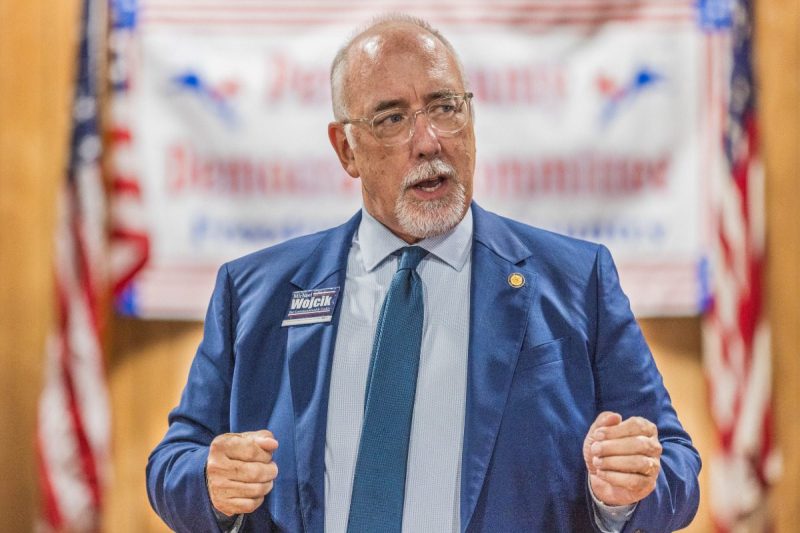
Commonwealth Court Judge Michael Wojick, who is up for retention this November, delivered a blistering speech to Perry County Democrats on Wednesday warning about ”vote no” consequences.
Once elected, judges on the statewide and county common pleas courts serve a 10-year term and then face a non-partisan “yes” or “no” retention vote to serve another term. If a retention vote fails, the governor may nominate an interim judge, and a special election to fill the seat permanently is held in the next odd-year election.
“ There are 65 common pleas judges up for retention this year, statewide. Add that to the five at the appellate level, that’s 73 judges,” Wojick said. “Each of us have at least 10 years experience in the aggregate. That’s 730 years of judicial experience.”
He added, “ now, raise your hand if you think that with the vote no campaign, that the MAGA voters are going to be able to stop at Supreme Court or Superior Court or Commonwealth Court. That they’ll know when they say ‘vote no’ on the judges, that they’re gonna know which judges to vote on. I don’t think they’re going to know that. And this is what really keeps me up at night.”
If any of the common pleas judges get swept up in the “no vote” campaign, Wojick warned that some counties throughout Pennsylvania would be left without any judges, bringing the courts to a halt until those seats are filled in 2027 during a special election.
“The [Republican Party] is not arguing against our qualifications. They’re arguing against basically two things,” Wojick said. “One that we were elected as Democrats 10 years ago, and two, they’re cherrypicking a couple cases that the Supreme Court decided in the course of their 10 year term.”
This November, Justices Kevin Dougherty, David Wecht and Christine Donohoue are up for a “yes” or “no” retention vote after serving their 10-year terms. The three Democrats flipped the court in 2015 after it was rocked by multiple scandals.
If the three justices are not successful, the court will most likely remain deadlocked until the 2027 election. Gov. Josh Shapiro has the ability to appoint temporary replacements, but they are unlikely to be confirmed by the Republican-controlled Pennsylvania Senate.
Justices seeking the bench or facing a retention election have restrictions on how they’re allowed to campaign for their seats. They’re allowed to start campaigning for those seats starting the day after the previous Election Day through the end of the next year following their election.
However, judicial candidates and incumbent judges are not allowed to fundraise on their own. Instead, they have committees raising money on their behalf. They’re also not allowed to express an opinion on any case or topic that may come before them.
Diane Bowman, chair of the Perry County Democratic Committee, explained how the Pennsylvania Supreme Court, and two other appellate courts, serve as backstops in protecting the rights of Pennsylvania residents.
“ We don’t have the White House, we don’t have the US Senate, we don’t have the US House,” Bowman said. “What we have here in Pennsylvania is we’ve got a democratic governor. We’ve got a slim majority in our house, but we do not have a Democratic majority in our Senate. So our courts are essential to us to make sure that we do not get stripped of the rights that we’re entitled to in this Commonwealth.”