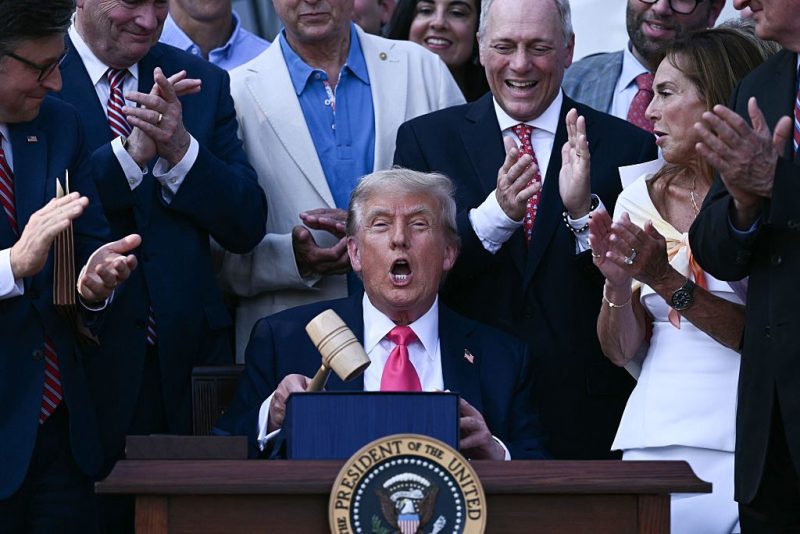
Provisions in President Donald Trump’s Big Beautiful Bill may cost Pennsylvanians their health care through Pennie, the state’s official marketplace.
After witnessing record enrollments the previous two years, roughly half of the Pennsylvanians enrolled in “Pennie,” the commonwealth’s official health care marketplace established under the Affordable Care Act (ACA), could lose their coverage in the coming years thanks to President Donald Trump’s Big Beautiful Bill.
”Half a million Pennsylvanians get their insurance through Pennie, and up to 200,000 of them are at risk for losing their insurance because this bill did not extend the policies of the previous administration that would make sure that premiums, deductibles, and copayments were lower,” State Rep. Arvind Venkat (D-Pittsburgh) told reporters at a press conference in Harrisburg on Tuesday.
Congressional Republicans failed to extend marketplace tax credits that are set to expire at the end of the year and provisions added to Trump’s budget that will hamper consumers with paperwork and red tape.
“ Think about that. At the same time that we are taking insurance away from the most vulnerable in our state, we are also saying to middle class Pennsylvanians you will no longer be able to afford health insurance, and that is catastrophic,” Venkat added.
The changes will shorten the open enrollment period by one month, require enrollees to pay the full price of their plans until their incomes are verified and end automatic reenrollments for those who obtain their coverage through a state operated marketplace beginning in 2028.
According to the Kaiser Family Foundation, roughly 65% of this year’s policyholders through Pennie were automatically reenrolled into their plans.
Health premiums could rise as much as 82% next year if the tax credits are not extended, forcing residents to pay four times more to keep their plan.
The Philadelphia Inquirer reported that up to 250,000 Pennie recipients could lose their coverage because of the changes made to the ACA marketplace and if Congress fails to extend the necessary tax credits.
“The bill wouldn’t just make coverage more expensive — it would make it harder to get. Pennsylvanians could face large increases in premiums and new red tape that would make it a burden to get the coverage they need,” Devon Trolley, Pennie Executive Director, said in a statement.
Gov. Josh Shapiro promised to continue holding Republicans accountable while speaking to the media earlier this week. Prior to the US House vote on Trump’s budget, Shapiro’s office posted graphics and a map highlighting how these cuts would impact Pennsylvanians in each Congressional district and singled out Republican representatives who were expected to vote for the bill.
”Pennsylvanians got screwed in this, and it breaks my heart after all the progress we’ve made to provide access to healthcare, provide access to food, to provide access to job opportunities, to bolster education in these communities, that the federal government with one vote ripped a good chunk of that away,” Shapiro said.
“ I’m going to continue to fight for Pennsylvanians, even though others have turned their backs on them.”